
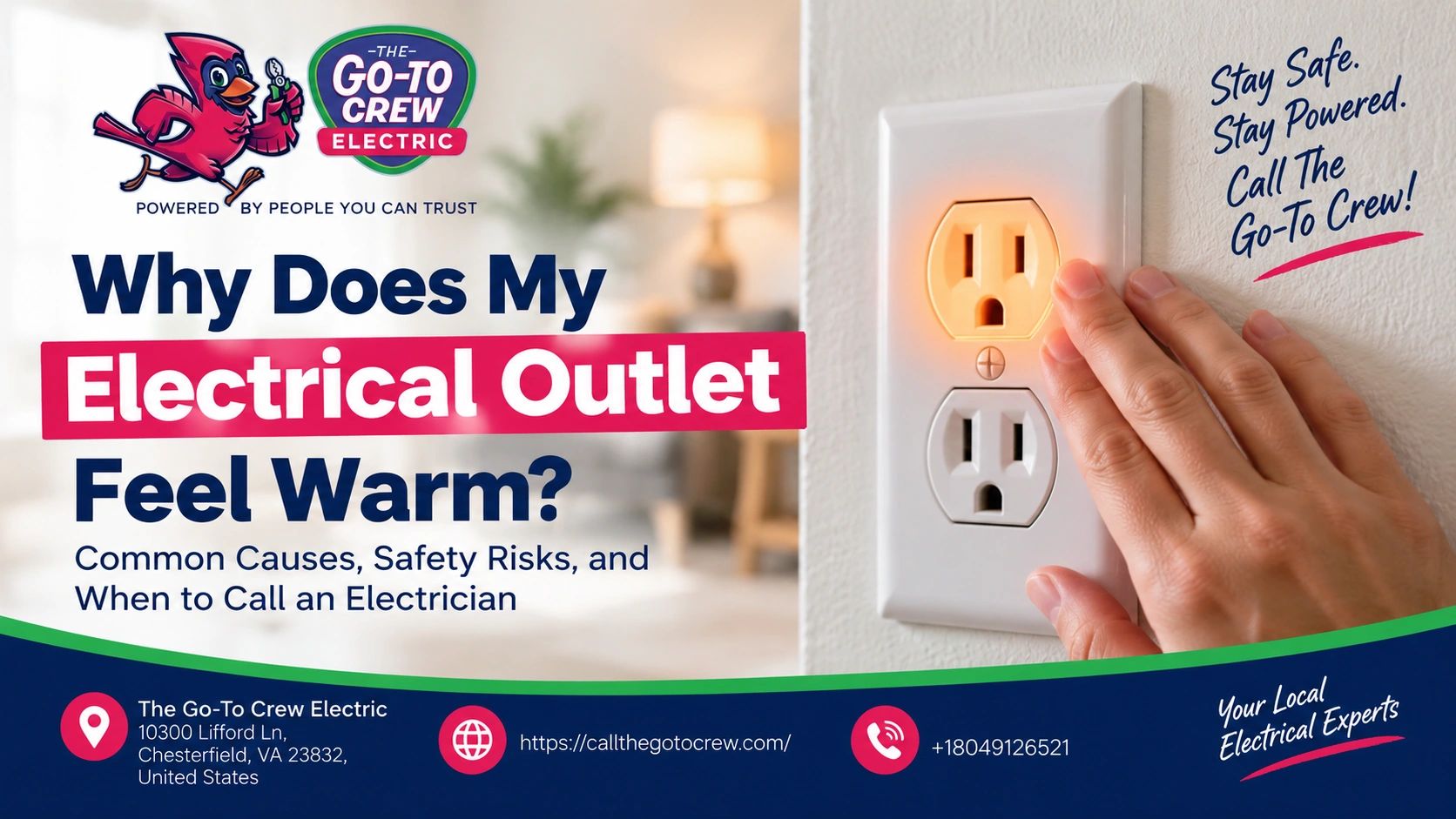
If an electrical outlet feels warm, do not automatically assume that it is normal. Noticeable heat can be a warning sign of excessive electrical load, a loose connection, a worn receptacle, damaged wiring, or another electrical problem.
The level of concern depends on what you are feeling and what other symptoms are present. An outlet that is hot or uncomfortable to touch, smells like burning plastic, looks discolored, buzzes, crackles, or produces sparks should not continue to be used.
Stop using the affected receptacle and have it evaluated rather than repeatedly plugging equipment back in to see whether the heat returns.
At The Go-To Crew Electric, we recommend professional outlet repair and installation when a receptacle shows signs of overheating or other abnormal electrical behavior.
Is It Normal for an Electrical Outlet to Feel Warm?
A wall outlet itself generally should not become noticeably hot during ordinary use.
Some electrical devices and power adapters naturally produce heat, which can sometimes make the area around a receptacle seem warmer. That is different from the outlet face, cover plate, or plug connection becoming unusually warm or hot.
If you notice heat, start by determining where it appears to be coming from.
Is the charger warm, or is the outlet warm?
Is only the appliance plug warm, or does the wall plate also feel hot?
Does the heat disappear when the device is unplugged?
These observations can be useful, but they should not turn into repeated testing of an outlet that already appears unsafe.
An outlet deserves professional attention when it is noticeably warmer than nearby receptacles, becomes increasingly hot during use, or is accompanied by other warning signs.
The U.S. Consumer Product Safety Commission specifically identifies unusually warm receptacles or switches as a potential sign of an unsafe wiring condition.
What Causes an Electrical Outlet to Get Warm?
Several electrical conditions can produce heat at an outlet. Homeowners cannot reliably identify every cause without testing, so think of these as possibilities rather than a DIY diagnosis.
Too much electrical load
An outlet or circuit may be supplying more equipment than it can appropriately handle.
This can happen when several higher-demand devices are connected through the same receptacle or when multiple outlets on the same circuit are heavily loaded.
Possible signs of an overloaded circuit can include:
- Warm or discolored outlets
- Flickering or dimming lights
- Repeated breaker trips
- Buzzing or sizzling sounds
- Burning odors
Adding another power strip does not increase the electrical capacity of the circuit.
If the circuit is repeatedly overloaded during normal household use, an electrician should determine whether the problem involves equipment use, the existing circuit, or a need for additional electrical capacity.
A loose electrical connection
Electrical connections need to remain secure.
A loose connection behind a receptacle can create resistance and heat. It may also lead to arcing, where electricity crosses a small gap instead of traveling through a solid connection.
Because the problem can be hidden behind the wall plate, the outlet may appear normal from the outside until other symptoms develop.
Do not remove the outlet from the wall to look for loose wires yourself.
A worn or damaged receptacle
Outlets wear over time.
If a plug no longer fits firmly, the internal contacts may not maintain the same connection they once did. Damaged components can contribute to heat or intermittent operation.
An outlet may need professional replacement if plugs feel unusually loose or repeatedly fall out.
A damaged plug or appliance
Sometimes the wall outlet is not the only possible source.
A damaged appliance cord, plug, charger, or connected device can create heat at the connection point.
Visually check equipment for obvious external damage after unplugging it safely. Do not continue using cords or plugs that show melting, discoloration, exposed conductors, or other damage.
Problems elsewhere on the circuit
An outlet can sometimes be affected by electrical connections elsewhere in the circuit.
That means an unused outlet becoming warm can still deserve attention.
A professional diagnosis may need to look beyond the single receptacle that feels warm to determine where the actual electrical problem originates.
What Warning Signs Require Immediate Attention?
Heat becomes more concerning when it appears alongside other signs of electrical trouble.
Stop using the outlet and seek prompt professional evaluation if you notice any of the following:
- The outlet or wall plate is hot or uncomfortable to touch
- A burning or melting-plastic odor
- Brown, black, or scorched discoloration
- Smoke
- Sparks or visible arcing
- Buzzing, crackling, or sizzling
- A melted plug or outlet
- Repeated breaker trips associated with the receptacle
- A shock or tingling sensation
- Heat that continues or becomes worse during use
CPSC advises consumers to discontinue use of a hot receptacle and obtain help from a qualified electrician. ESFI similarly identifies warm or discolored outlets, buzzing, burning odors, and repeated breaker trips as warning signs of overload or wiring problems.
If you see smoke, active arcing, fire, or another immediate danger, move away from the hazard and contact emergency services as appropriate.
For urgent electrical conditions that require professional electrical attention, The Go-To Crew Electric also provides emergency electrician services.
What Should You Avoid Doing With a Warm Outlet?
The safest response to an unexplained warm outlet is not to start taking it apart.
Avoid several common reactions that can make the situation more dangerous.
Do not keep using the outlet to test it
If you already know the outlet becomes unusually warm, repeatedly plugging the appliance back in does not provide a safe diagnosis.
Leave it unused until the source of the heat is understood.
Do not remove the outlet from the wall
Removing a receptacle can expose energized wiring and electrical connections.
Determining whether a connection is loose, burned, damaged, or improperly installed requires appropriate electrical testing and safety procedures.
Do not tighten wires yourself
Loose connections are one possible cause of outlet overheating, but tightening electrical terminals is not a homeowner troubleshooting step.
The outlet may have other damage that is not visible from the front.
Do not replace the breaker with a larger one
If the circuit breaker is also tripping, increasing its amperage is not a solution.
Breakers are selected to protect electrical wiring. Changing breaker size without evaluating the circuit can create an unsafe condition.
Do not rely on an extension cord as a permanent workaround
Moving a high-demand appliance to a distant outlet using an extension cord can introduce new electrical concerns rather than solve the original one.
If the room does not have enough electrical capacity or conveniently located outlets, have the electrical layout professionally evaluated.
How Does an Electrician Diagnose a Warm Outlet?
A professional diagnosis involves determining where the excess heat is coming from and why it is developing.
The electrician may begin by asking what was plugged into the receptacle and when the warmth occurs.
Useful information includes:
- Which device was operating
- How long it had been running
- Whether other appliances were operating on the circuit
- Whether the breaker has tripped
- Whether the problem happens every time
- Whether there were odors or sounds
- Whether the outlet has recently been replaced
- Whether plugs fit loosely
The electrician can then evaluate the outlet and the surrounding electrical system as appropriate.
The receptacle itself may be checked
The electrician can determine whether the device is worn, damaged, overheated, or improperly connected.
If the receptacle is defective, replacement may be appropriate.
Connections can be evaluated
Loose or deteriorated wiring connections can generate heat.
A qualified electrician can access and inspect those connections using appropriate safety procedures instead of relying on outward appearance alone.
Circuit load may be considered
If several appliances share the circuit, the electrician may investigate whether electrical demand is contributing to the problem.
This is particularly useful when the outlet becomes warm only while higher-demand equipment operates.
The breaker and circuit may need evaluation
A warm outlet can sometimes be one symptom of a larger circuit issue.
The electrician may need to determine what other receptacles or devices are connected and whether the circuit is operating appropriately.
The exact diagnostic process depends on the symptoms and electrical configuration of the home.
When Should You Call an Electrician?
Call an electrician when an outlet becomes noticeably warm without an obvious explanation or when the condition repeats.
Professional evaluation becomes particularly important if:
- The receptacle becomes hot
- Heat occurs with ordinary appliance use
- There is discoloration or melting
- You smell burning
- The outlet buzzes, crackles, or sparks
- Plugs no longer fit securely
- The circuit breaker repeatedly trips
- The outlet stops working intermittently
- Other outlets on the same circuit behave abnormally
You do not need to wait for the receptacle to stop working completely.
Heat itself can be an early warning that a connection or component is not operating properly.
For homeowners in the area, an electrician in Chester, VA can evaluate a warm outlet and determine whether the problem is isolated to the receptacle or involves the surrounding circuit.
At The Go-To Crew Electric, the goal is to locate the cause of the heat rather than simply replacing parts without understanding why the outlet became warm.
Treat Unusual Outlet Heat as a Warning Sign
An electrical outlet that feels unusually warm deserves attention.
Sometimes the cause may involve excessive load or a damaged connected device. In other situations, the heat can originate from a worn receptacle, loose connection, damaged wiring, or another electrical condition hidden behind the wall.
The safest approach is simple: if the outlet becomes noticeably hot, smells like burning, discolors, sparks, buzzes, or repeatedly trips a breaker, stop using it.
Do not remove the receptacle or attempt wiring repairs yourself.
The Go-To Crew Electric provides professional outlet services to diagnose overheating, damaged receptacles, loose connections, and other outlet concerns before they develop into larger electrical problems.
FAQs
Why does my electrical outlet feel warm when something is plugged in?
Heat can develop because of excessive electrical load, a loose connection, a worn receptacle, a damaged plug, or another electrical problem. If the wall outlet itself becomes noticeably warm or hot, stop using it and have the cause evaluated.
Is a slightly warm outlet dangerous?
Do not judge electrical safety solely by how warm the outlet feels. If a receptacle is noticeably warmer than surrounding outlets or repeatedly heats up during normal use, professional evaluation is appropriate. Heat accompanied by burning odors, discoloration, buzzing, sparks, or breaker trips is more urgent.
Can an overloaded outlet get hot?
Yes. Excessive electrical demand can contribute to overheating, and overloaded circuits can also cause breaker trips, dimming lights, buzzing, or burning odors. A power strip does not increase the underlying circuit’s capacity.
Can a loose outlet connection cause heat?
Yes. Loose electrical connections can create resistance, arcing, and excess heat. Because these connections may be hidden behind the wall plate, they should be inspected by a qualified electrician rather than treated as a DIY repair.
Should I unplug something if the outlet feels hot?
If it can be done safely without touching a hot or damaged component, stop using the affected receptacle. If there is significant heat, smoke, melting, sparking, active arcing, or another immediate danger, keep away from the hazard and seek appropriate emergency assistance rather than handling the outlet.
Should I replace a warm electrical outlet myself?
No. Replacing the receptacle without diagnosing why it became warm can leave the underlying problem unresolved and exposes you to electrical hazards. Have an electrician determine whether the issue involves the outlet, connections, wiring, circuit load, or another component.