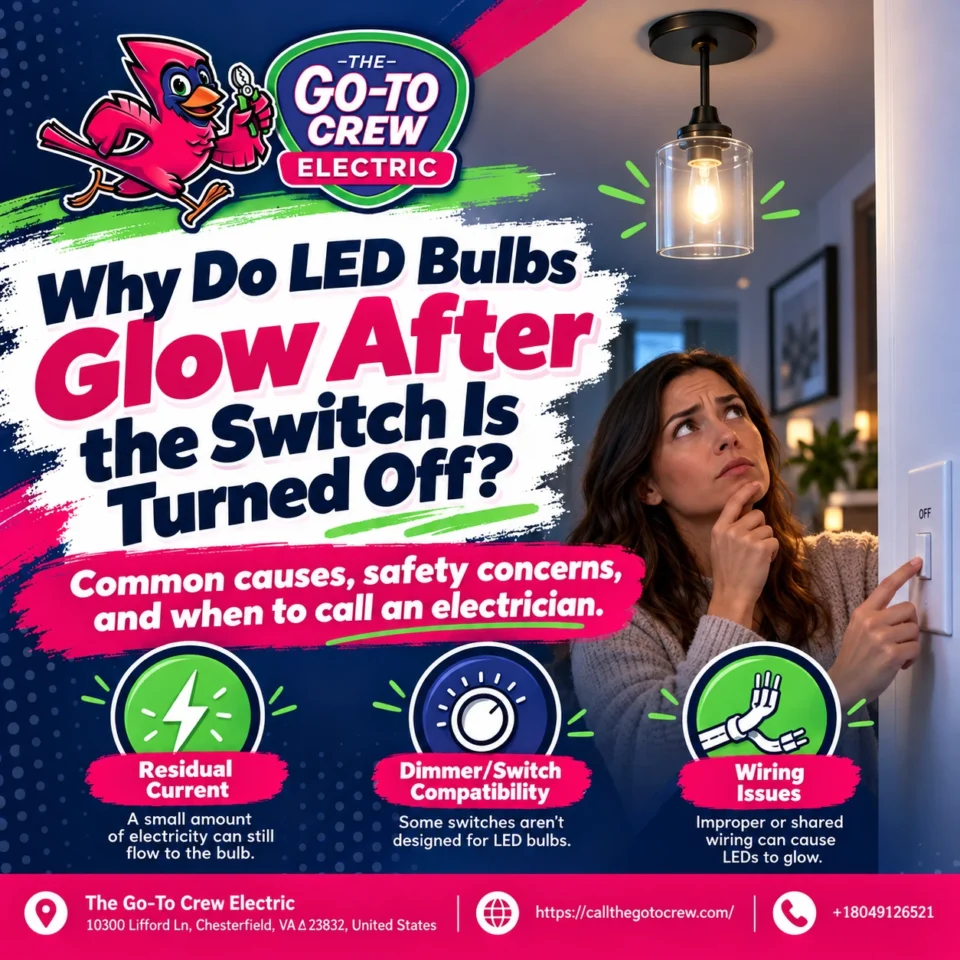
Lights can flicker because of loose bulbs, incompatible dimmers, overloaded circuits, loose wiring, voltage changes, faulty switches, or problems inside the electrical panel. Some flickering is minor, but repeated or widespread flickering may require electrical repair for flickering lights to prevent damage, overheating, or safety risks.
A single flickering bulb may be simple to fix. Flickering across multiple rooms, flickering with buzzing sounds, warm switches, burning smells, or frequent breaker trips should be checked by an electrician for lighting issues in Chesterfield, VA.
What Causes Lights to Flicker in a House?
The most common lights flickering causes include loose bulbs, old switches, incompatible LED dimmers, overloaded circuits, voltage drops, faulty fixtures, loose wiring, or electrical panel problems. The cause depends on whether the flicker affects one light, one room, or the whole house.
A single flickering fixture often points to a bulb, socket, switch, or fixture issue. Flickering in several rooms may point to a circuit, panel, service connection, or utility-side problem.
Common lights flickering causes include:
- Loose light bulbs
- Poor bulb-to-socket contact
- Faulty light fixtures
- Worn switches
- Incompatible LED dimmers
- Overloaded circuits
- Loose wiring connections
- Voltage fluctuations
- Large appliances starting up
- Electrical panel issues
- Utility service problems
Why LEDs Flicker
LED lights can flicker when paired with older dimmer switches made for incandescent bulbs. LEDs use lower wattage, so the dimmer must be compatible with LED loads.
ENERGY STAR has published testing guidance for evaluating light source flicker with and without dimmers, which reflects how dimming compatibility can affect performance.
Why Lights Dim When Appliances Start
A brief flicker when an air conditioner, refrigerator, or large appliance starts can happen because that equipment pulls extra current at startup. If the flicker is strong, frequent, or affects many lights, have it checked.
Flickering can come from simple bulb issues or deeper electrical problems. The pattern tells you how serious it may be.
Is Flickering Lights a Serious Electrical Problem?
Flickering lights can be serious when the flicker is repeated, widespread, worsening, or connected to other warning signs. A one-time flicker may not be a major concern, but ongoing flickering can point to unsafe wiring, overloaded circuits, or panel trouble.
Electrical distribution and lighting equipment are a major source of home fire risk. The Electrical Safety Foundation International reports that NFPA data showed an average of 31,647 home fires per year from 2011 to 2023 caused by electrical distribution or lighting equipment, resulting in hundreds of deaths and more than a billion dollars in direct property loss annually.
Warning Signs That Need Attention
Call an electrician if flickering happens with:
- Buzzing sounds
- Crackling sounds
- Burning smells
- Warm switches
- Warm outlets
- Discolored outlets
- Frequent breaker trips
- Lights dimming across multiple rooms
- Flickering after storms
- Flickering that gets worse over time
When It May Be Less Serious
If one lamp flickers and the bulb is loose, the fix may be simple. Turn the light off, let the bulb cool, and check that it is secure.
If the flicker continues after replacing the bulb, the issue may be in the fixture, switch, wiring, or circuit.
Occasional flickering from one loose bulb is usually minor. Repeated or widespread flickering should be treated as a possible electrical safety issue.
Can Loose Wiring Cause Flickering Lights?
Yes, loose wiring can cause flickering lights. It is one of the more serious lights flickering causes because loose connections can create heat, arcing, and unstable power flow.
Loose wiring can happen in switches, outlets, fixtures, junction boxes, breakers, or the electrical panel. It may also happen where the utility service connects to the home.
Why Loose Wiring Is Dangerous
Electricity needs a stable path. A loose connection can interrupt that path, causing lights to flicker or dim.
The bigger concern is heat. Loose connections can overheat, damage insulation, and increase fire risk.
The NFPA warns homeowners not to take electrical hazards lightly and provides safety guidance around home electrical fire risks.
Signs of Possible Loose Wiring
You may notice:
- Flickering when using a switch
- Lights flickering in one area
- Buzzing from a switch or outlet
- A burning smell
- Warm wall plates
- A fixture that flickers when touched
- Breakers tripping
- Outlets that work intermittently
Do not open switches, outlets, or panels to look for loose wiring unless you are qualified to do electrical work. Panel and wiring work should be handled by a licensed electrician.
Loose wiring can cause flickering and may create a fire hazard. This is not a DIY repair.
Should I Worry if Lights Flicker Occasionally?
You do not always need to worry if lights flicker occasionally, especially if it happens once when a large appliance starts or when a bulb is loose. You should pay attention if flickering becomes frequent, spreads to multiple rooms, or happens with other electrical symptoms.
Occasional flickering may be caused by:
- A loose bulb
- A lamp plug not fully seated
- A single aging bulb
- Appliance startup
- A dimmer setting
- Utility power fluctuation
When to Monitor It
If one bulb flickers once in a while, replace the bulb and check the fixture. If it stops, the issue was likely minor.
If it comes back, call an electrician.
When Not to Ignore It
Do not ignore flickering if it affects several lights at once. This can point to voltage instability or a larger electrical issue.
Also do not ignore flickering after storms, after new appliances are installed, or after recent electrical work.
Occasional flickering can be harmless, but recurring flickering deserves attention. A small pattern can be the first sign of a larger electrical issue.
How Do Electricians Fix Flickering Lights?
Electricians fix flickering lights by finding the source of the problem first. They may check bulbs, fixtures, switches, dimmers, wiring connections, circuits, voltage levels, breakers, and the electrical panel.
The repair depends on the cause. Guessing can waste time and miss the actual safety issue.
Common fixes include:
- Tightening safe electrical connections
- Replacing worn switches
- Replacing faulty fixtures
- Installing LED-compatible dimmers
- Repairing damaged wiring
- Balancing circuit loads
- Replacing weak breakers
- Correcting panel issues
- Checking grounding and bonding
- Recommending utility inspection when needed
Why Dimmer Compatibility Matters
If LED bulbs flicker on a dimmer, the dimmer may not be designed for LED loads. Some LED bulbs also work better with certain dimmers than others.
Replacing the dimmer with an LED-compatible model often solves dimming flicker.
Why Testing Matters
An electrician may test voltage and inspect connections to see whether the issue is local or system-wide. This helps separate simple fixture problems from panel or service concerns.
Proper electrical repair for flickering lights starts with diagnosis. Electricians repair the cause, not just the symptom.
Do Flickering Lights Increase Fire Risk?
Flickering lights can increase fire risk when they are caused by loose wiring, overloaded circuits, damaged switches, faulty fixtures, or panel problems. Flickering itself is a symptom. The underlying cause determines the danger.
A loose bulb is not the same as loose wiring in a wall. One is simple. The other may be hazardous.
Fire-Risk Warning Signs
Call an electrician quickly if flickering happens with:
- Burning smell
- Buzzing or sizzling sounds
- Warm switches or outlets
- Discolored wall plates
- Sparking
- Frequent breaker trips
- Flickering in multiple rooms
- Lights that dim when small appliances run
- Flickering that gets worse
NFPA electrical safety guidance emphasizes that electricity can create fire-related hazards and should not be taken for granted.
Why Overloaded Circuits Matter
Overloaded circuits can overheat wiring and trip breakers. Breakers are designed to protect the circuit, but repeated trips mean something is wrong.
Do not keep resetting a breaker without finding the cause.
Flickering can be a fire-risk warning sign when tied to wiring, circuit, or panel issues. Burning smells, heat, buzzing, or repeated breaker trips need immediate attention.
When Should I Call an Electrician for Flickering Lights?
You should call an electrician when flickering is frequent, affects multiple rooms, continues after changing bulbs, happens with dimmers that may be incompatible, or comes with signs of overheating, buzzing, burning smells, or breaker trips. An electrician for lighting issues in Chesterfield, VA can determine whether the problem is minor or connected to a deeper electrical hazard.
Call for professional help if:
- Multiple lights flicker at once
- Flickering happens daily
- Lights dim when appliances run
- A switch feels warm
- An outlet smells burnt
- A breaker trips repeatedly
- A fixture buzzes or crackles
- Flickering started after electrical work
- Flickering started after installing new appliances
- You have older wiring
- Lights flicker even after replacing bulbs
What You Can Safely Check First
You can safely check simple issues:
- Tighten a cool bulb
- Replace a questionable bulb
- Try a different lamp outlet
- Check if the flicker happens only with one fixture
- Note when the flickering happens
Do not remove switches, outlets, fixtures, or panel covers unless you are qualified.
Why Early Service Helps
Early service can prevent damage to fixtures, appliances, and electronics. It can also uncover unsafe wiring before it becomes more serious.
Key takeaway: Call an electrician when flickering is repeated, widespread, or linked to heat, sound, smell, or breaker problems. These are signs that the issue may need professional repair.
Conclusion
Flickering lights can be caused by various factors, from simple bulb issues to more serious electrical problems like loose wiring or overloaded circuits. While occasional flickering may not be a cause for concern, persistent or widespread flickering could indicate a deeper issue that needs professional attention.
Don’t take any risks with your home’s electrical system. Contact a licensed electrician if you notice flickering lights that don’t resolve on their own.
Get Flickering Lights Checked Before They Become a Bigger Problem
Flickering lights can come from simple issues like loose bulbs or incompatible LED dimmers, but they can also point to loose wiring, overloaded circuits, faulty fixtures, voltage problems, or panel concerns. The safest approach is to watch the pattern and call for electrical repair for flickering lights when the issue repeats, spreads, or comes with warning signs.
At The Go-To Crew Electric, we help homeowners find the real cause of flickering lights and repair lighting problems safely. If you need an electrician for lighting issues in Chesterfield, VA, we can inspect your fixtures, switches, circuits, and panel so your home’s lighting works safely and reliably. For related home safety concerns, you may also find breaker panel failures and home electrical repair services helpful.