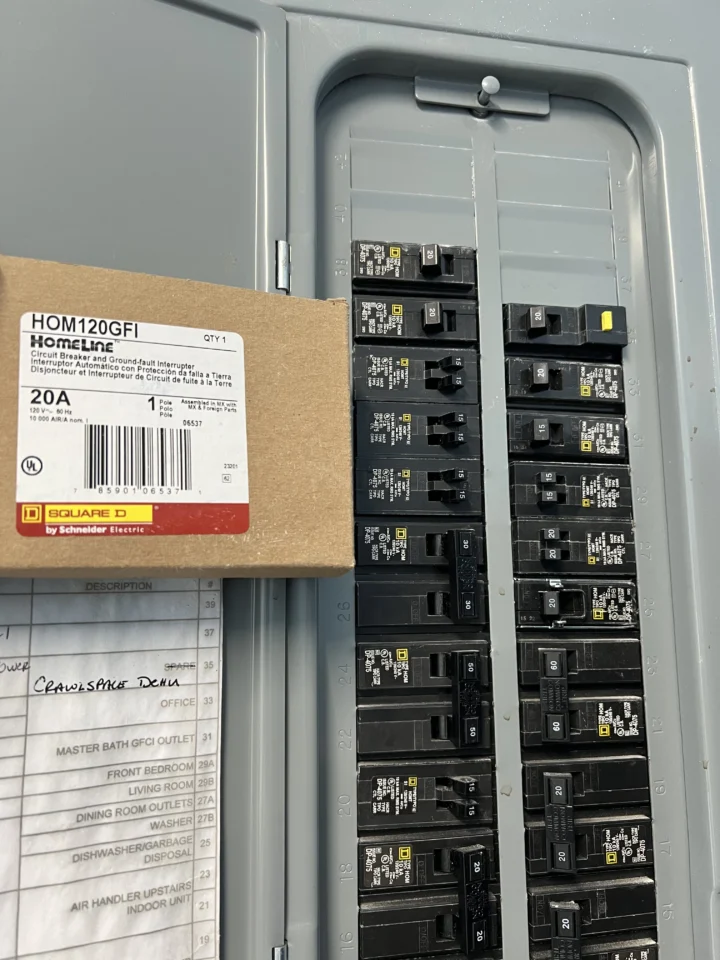
A washing machine may repeatedly trip a GFCI because the GFCI is detecting electrical current leaking along an unintended path. The source might be inside the washing machine, in its power cord, at the outlet, or elsewhere in the electrical circuit.
A GFCI is designed to protect people from electrical shock. It compares the current flowing out on the circuit with the current returning and quickly disconnects power when it detects an imbalance consistent with a ground fault.
That means repeated tripping should not simply be treated as a nuisance.
If the GFCI trips once, resetting it according to the manufacturer’s instructions may restore operation. If it repeatedly trips, trips immediately, or is accompanied by burning smells, heat, buzzing, sparks, or visible damage, stop resetting it and have the problem diagnosed.
Why Does My Washing Machine Keep Tripping the GFCI?
Possible causes include:
- An electrical fault inside the washing machine
- Current leaking to ground through a damaged appliance component
- Moisture reaching electrical components
- A damaged washer cord or plug
- A faulty or deteriorated GFCI receptacle
- Damaged or loose circuit wiring
- Improper grounding
- A circuit problem elsewhere upstream
- An installation that does not match the washer’s electrical requirements
The pattern of the trip can provide useful clues.
For example:
The GFCI trips as soon as the washer is plugged in:
The washer, cord, receptacle, or electrical circuit may have a fault requiring diagnosis.
The GFCI trips only after the cycle begins:
The problem may appear when a particular washer component begins operating.
The GFCI trips during the same stage of every wash:
That pattern can help an appliance technician narrow down which internal system is operating when the fault occurs.
The GFCI trips even when the washer is unplugged:
The outlet, GFCI device, wiring, or another load on the protected circuit becomes more suspicious.
These patterns can help a technician, but they should not be used as a reason to open the washer or electrical system yourself.
Why Are GFCI Outlets Used in Laundry Areas?
Laundry rooms combine electricity, water connections, drains, and appliances that contain electrical components.
GFCI protection helps reduce shock risk if electrical current begins flowing along an unintended path.
Current electrical standards include laundry areas among residential locations requiring GFCI protection. Virginia currently uses the 2020 National Electrical Code as part of its effective code framework, and NEC 210.8 includes laundry areas among dwelling-unit locations where receptacle GFCI protection applies.
The protection may come from:
- A GFCI receptacle
- A GFCI circuit breaker
- Another upstream GFCI device protecting the outlet
That means the outlet the washer plugs into may not necessarily have visible TEST and RESET buttons even though it is GFCI-protected.
ESFI recommends testing GFCI protection regularly and having a qualified electrician replace a device whose test or reset function does not work correctly.
Can a Washing Machine Fault Cause the GFCI to Trip?
Yes.
A washing machine contains numerous electrical components, including motors, pumps, controls, valves, wiring, and on some designs heating components.
If insulation or an electrical component fails and allows current to leak toward the metal chassis or ground, a properly functioning GFCI may detect the imbalance and disconnect power.
GE Appliances notes that washers and other major appliances can trip protective devices because of conditions such as failed components, loose internal electrical wires, or shorts. If the household electrical circuit remains stable when the appliance is disconnected but trips when the appliance operates, appliance diagnosis may be necessary.
The point at which the washer trips can sometimes help the appliance technician.
For example, note whether it occurs:
- Immediately when plugged in
- When Start is pressed
- While filling
- While agitating or tumbling
- During draining
- During the spin cycle
Do not open the appliance or attempt internal electrical testing based on that pattern. Simply provide the information to the technician.
Can Moisture Cause a Laundry GFCI to Trip?
Yes.
Moisture can create a path for electrical leakage, which is exactly the kind of condition a GFCI is intended to detect.
Potential moisture sources around a washer include:
- A leaking supply hose
- A drain leak
- Water behind or beneath the washer
- A leaking appliance component
- Moisture reaching a receptacle
- Excessive dampness around damaged electrical components
If you see water around the outlet, plug, power cord, or electrical wiring, avoid touching the wet electrical equipment.
Shut off power only if you can do so safely without entering a wet area or contacting wet electrical components, and arrange professional evaluation.
Do not repeatedly reset a GFCI while an active water leak is present.
Could the Outlet or Circuit Be the Problem?
Yes.
Repeated GFCI trips do not automatically mean the washing machine is defective.
An electrician may find a problem involving:
- A worn GFCI receptacle
- A damaged receptacle
- Loose wiring
- Damaged branch-circuit wiring
- Improper connections
- Grounding problems
- Another device protected downstream by the same GFCI
GFCI devices can also wear or fail over time.
The Go-To Crew Electric’s outlet services include diagnosing faulty, intermittent, damaged, or improperly functioning receptacles, including GFCI outlets.
A useful diagnostic distinction is what happens when the washer is disconnected.
GE Appliances notes that if a protective device trips immediately even after the appliance has been unplugged, the problem is more likely associated with household wiring or the breaker equipment and should be evaluated by an electrician.
Learn more about electrical outlet services.
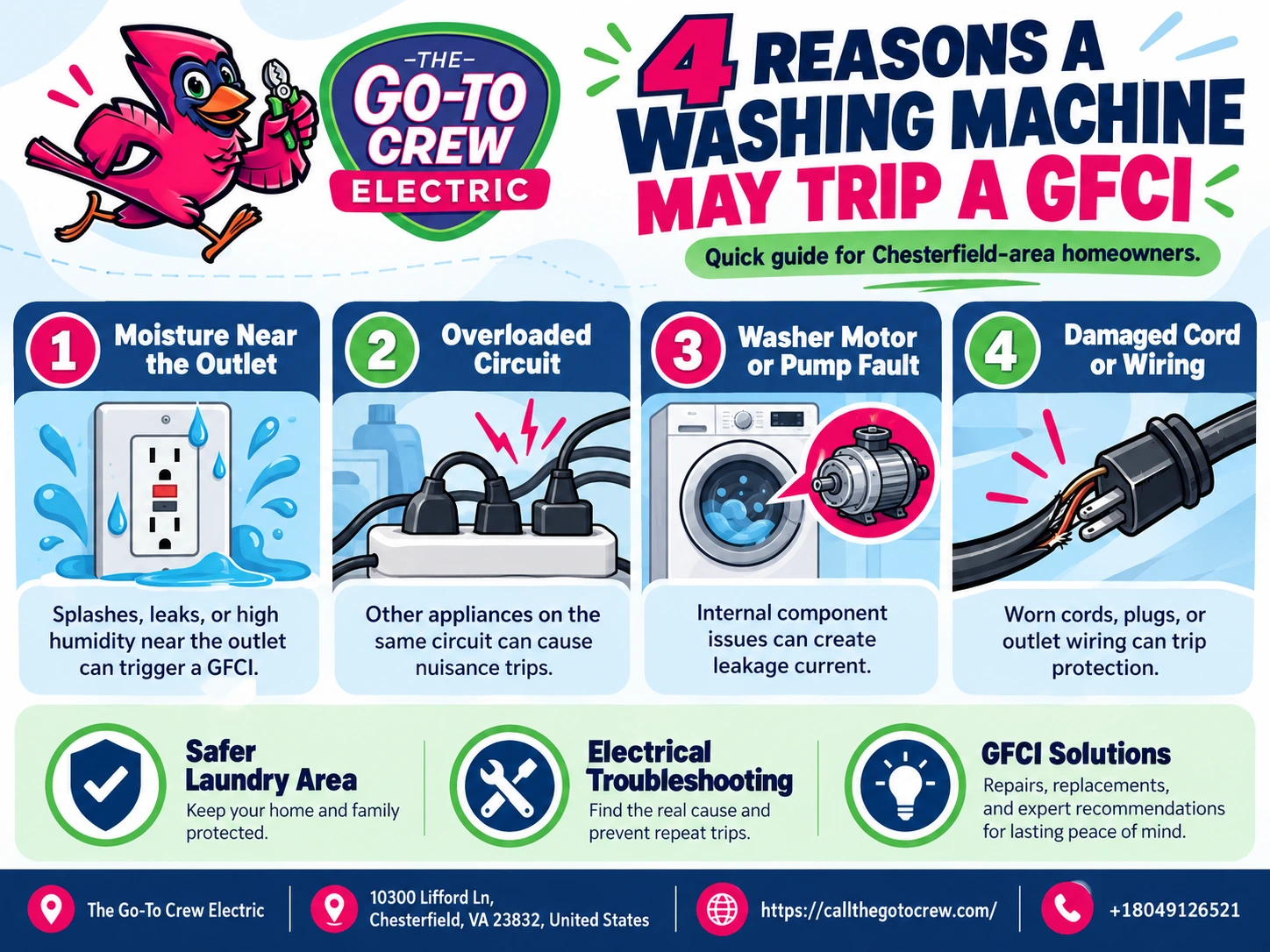
Can an Overloaded Laundry Circuit Cause Tripping?
It can cause electrical protection to operate, but there is an important distinction.
A standard circuit breaker protects wiring primarily from excessive current caused by conditions such as overloads or short circuits.
A GFCI primarily protects people from ground faults and leakage current.
ESFI explains that conventional circuit breakers operate when current exceeds their rated level, while GFCIs operate when current takes an unintended path and the outgoing and returning current no longer match.
So if your panel breaker trips while the washer is running, an overloaded circuit may be one possibility.
If the GFCI receptacle’s RESET button pops out, a ground-fault or leakage issue is generally more relevant than simple load alone.
Some installations use breakers that combine multiple types of protection, which can make the distinction less obvious to a homeowner.
Washing machines also need an electrical supply that matches the appliance requirements. For example, Whirlpool specifies a grounded 120-volt supply for many washers and recommends appropriate circuit protection, while GE lists 15- or 20-amp individual grounded branch circuits for many standard washer models. Always follow the installation instructions for the specific washer.
What Safe Checks Can Homeowners Make?
Troubleshooting should stay simple and non-invasive.
You can safely note:
- Whether the GFCI receptacle or the panel breaker is tripping
- When during the wash cycle the trip occurs
- Whether there is visible water near the outlet
- Whether the washer’s cord or plug shows obvious damage
- Whether the washer is plugged directly into the wall
- Whether other electrical problems are happening in the laundry room
If conditions are dry and there is no visible damage or burning smell, you can follow the GFCI manufacturer’s instructions to reset the device once.
Whirlpool’s washer guidance similarly recommends checking whether the household GFCI or breaker has tripped and resetting it, but advises contacting an electrician if the problem continues. Whirlpool also advises plugging the washer directly into a grounded receptacle rather than using an extension cord.
Do not:
- Bypass the GFCI
- Replace it with a non-GFCI receptacle just to stop the trips
- Use an extension cord as a permanent solution
- Open the receptacle
- Remove the electrical-panel cover
- Increase breaker size
- Open the washer to test live components
Repeated tripping needs diagnosis, not removal of the safety device.
When Should You Stop Resetting the GFCI?
Stop repeatedly resetting the GFCI when:
- It trips again immediately
- It trips every time the washing machine starts
- The frequency of trips is increasing
- You notice water near electrical equipment
- The receptacle feels unusually warm
- You smell burning
- You hear buzzing or crackling
- You see discoloration, scorching, or melted material
- The plug or power cord appears damaged
ESFI recommends professional evaluation for recurring electrical protection trips and identifies heat, burning odors, buzzing, and other abnormal electrical behavior as warning signs that should not be ignored.
A GFCI that will not reset or does not respond correctly to its TEST function may also need replacement.
Do not assume the safest solution is to eliminate the GFCI. If it is required in that location, bypassing the protection can increase shock risk without solving the underlying fault.
When Should You Call an Appliance Technician?
An appliance technician becomes particularly relevant when the evidence points toward the washing machine itself.
That may be the case when:
- The GFCI remains stable while the washer is unplugged
- The trip consistently occurs only when the washer runs
- The trip repeatedly occurs during one stage of the wash cycle
- The washer shows other operational problems
- The washer has an electrical or burning odor that appears to originate inside the appliance
- Another qualified evaluation has confirmed the household circuit is functioning properly
GE Appliances notes that washers can trip electrical protection because of failed internal components or internal wiring problems and recommends appliance repair when the fault is determined to be within the appliance.
The appliance technician can evaluate internal washer components that an electrician would not normally service.
If it is unclear whether the problem is the appliance or the house wiring, starting with an electrician is reasonable because the outlet, GFCI protection, grounding, and branch circuit can first be checked for safety.
When Should You Call an Electrician?
Call a licensed electrician when:
- The GFCI continues to trip
- The outlet trips with the washing machine unplugged
- The GFCI will not reset
- The TEST button does not operate correctly
- The outlet is loose, damaged, warm, or discolored
- You hear buzzing or crackling
- You smell burning near the outlet or electrical panel
- The panel breaker is also tripping
- Other outlets or lights on the circuit are behaving abnormally
- You are unsure whether the washer is on an appropriate circuit
- The home’s wiring is older or has been modified
- The cause is unclear
Whirlpool specifically advises contacting an electrician when a washer continues losing power because the breaker or GFCI repeatedly trips.
The electrician can evaluate:
- The GFCI device
- Receptacle condition
- Grounding
- Branch-circuit wiring
- Electrical connections
- Circuit breaker
- Circuit loading
- Voltage and other electrical conditions
If the household electrical system checks out but the washer still trips the protection when operating, appliance service may then be the next step.
The Go-To Crew Electric provides both outlet and circuit-breaker services in Midlothian, including outlet replacement, wiring repairs, breaker repairs, and broader electrical troubleshooting.
Learn more about our electrical outlet services, explore circuit breaker services, or visit our Midlothian electrician page.
FAQs
Why does my washing machine trip the GFCI as soon as I plug it in?
An immediate trip can indicate current leakage or another electrical fault involving the appliance, cord, receptacle, or circuit.
If the GFCI trips repeatedly, leave the washer disconnected and arrange a professional diagnosis rather than continuing to reset the device.
Why does the GFCI trip only during the spin or drain cycle?
The timing may indicate that the fault appears when a particular washer component operates.
Record when the trip happens and provide that information to an appliance technician or electrician. The timing can help with diagnosis, but homeowners should not open the washer to test internal electrical components.
Does repeated GFCI tripping mean the outlet is bad?
Not necessarily.
A failing GFCI is one possibility, but an appliance fault, moisture, damaged wiring, improper grounding, or another circuit problem can also cause repeated trips.
An electrician can test the receptacle and circuit before deciding whether replacement is appropriate.
Can I replace the GFCI with a normal outlet so the washer stops tripping?
No. Removing required GFCI protection does not repair the underlying electrical fault and may remove important shock protection.
Laundry areas are among the locations covered by current residential GFCI requirements.
Is a GFCI trip the same as a breaker trip?
Not always.
A conventional breaker primarily responds to overcurrent conditions such as overloads and short circuits. A GFCI responds to leakage or ground-fault current. A GFCI breaker can incorporate both types of protection.
Knowing which device is actually tripping can help an electrician diagnose the problem.
Should I call an electrician or washing machine repair technician first?
If the outlet trips with the washer unplugged, the GFCI will not reset, or there are signs of outlet, wiring, or breaker problems, call an electrician.
If the electrical circuit has been confirmed to be functioning correctly but the GFCI consistently trips only while the washer operates, an appliance technician may need to diagnose the washing machine itself.