
Electrical planning should begin before excavation, decking, or pool equipment installation makes wiring routes and bonding connections difficult to access.
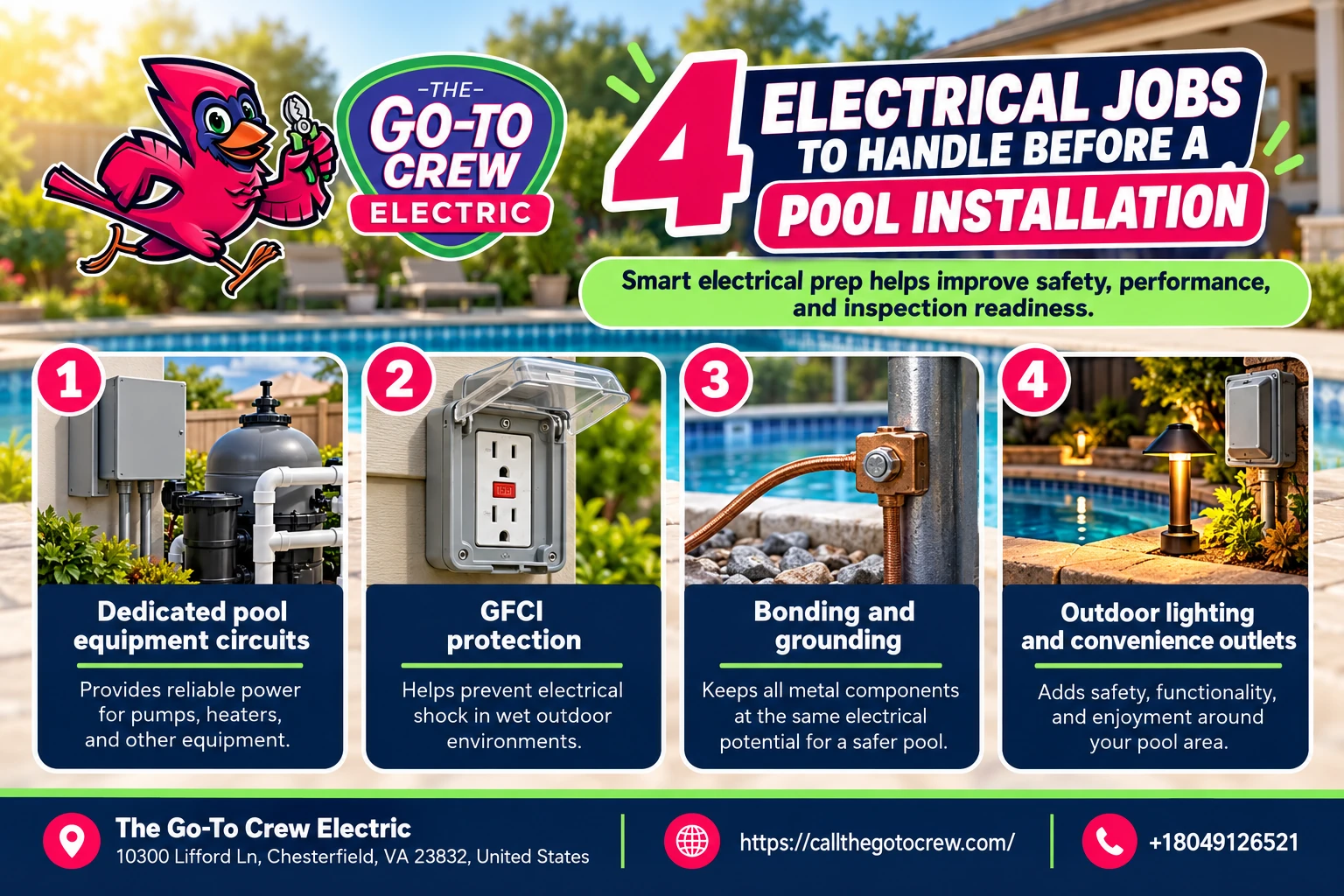
A new pool can require electrical work for the circulation pump, heater, sanitation equipment, controls, lighting, convenience receptacles, and other accessories. The project may also require GFCI protection, equipotential bonding, underground wiring, permits, and inspections specifically related to pool electrical safety.
In Chesterfield County, residential swimming pool projects require an electrical permit. For in-ground pools, the county lists pool underground, bonding, pool-potting, rough-in, and final electrical inspections among the applicable inspection stages.
That makes it helpful to involve a licensed electrician early—ideally while the pool layout and equipment locations are still being finalized.
What Electrical Work Is Needed Before Installing a Pool?
The exact electrical scope depends on the type of pool and equipment being installed, but common planning areas include:
- Electrical service and panel capacity
- Dedicated equipment circuits
- Pool pump wiring
- Heater or heat-pump power
- GFCI protection
- Equipotential bonding
- Underground wiring and conduit routes
- Outdoor receptacles
- Pool and landscape lighting
- Automation and control equipment
- Required disconnects
- Permits and inspections
The electrical work should be designed around the complete pool project rather than added as an afterthought.
For example, an electrician may need to know:
- Where the pump and filter equipment will sit
- Whether there will be a pool heater
- Whether lighting is planned inside or around the pool
- Whether a spa, water feature, or automatic cover is included
- Where decking will be poured
- Where underground utilities will run
- Whether the existing electrical panel has sufficient capacity
The Go-To Crew Electric provides wiring for new construction, renovation, and customized electrical projects, including coordination around future electrical needs.
Learn more about our electrical wiring services.
What Power Does Pool Equipment Typically Require?
A pool may involve several separate electrical loads.
Common equipment can include:
- Circulation pumps
- Variable-speed pumps
- Pool heaters or heat pumps
- Saltwater chlorine generators
- Automatic pool covers
- Lighting transformers or controls
- Automation systems
- Water features
- Spa equipment
Each piece of equipment has its own manufacturer electrical requirements.
That means the electrician should evaluate the actual equipment specifications rather than assume that every pool needs the same circuit arrangement.
A relatively simple pool with one pump may place very different demands on the home’s electrical system than a pool with:
- A large electric heater
- Integrated spa
- Multiple pumps
- Waterfalls
- Extensive lighting
- Automated controls
This is also a good time to evaluate whether the existing electrical panel can support the planned equipment.
An electrician may perform a load evaluation and determine whether the project needs only new branch circuits or whether the existing electrical system requires other changes.
Why GFCI Protection Matters Around Pools
Water and electricity create a particularly serious shock hazard.
A ground-fault circuit interrupter, or GFCI, is designed to quickly interrupt power when it detects current traveling along an unintended path.
GFCI protection is a fundamental part of electrical safety around swimming pools. NEC Article 680 contains GFCI requirements for pool-related electrical equipment, including certain pump-motor circuits, receptacles, and equipment in pool environments.
Depending on the installation, GFCI protection may apply to:
- Pool pumps
- Receptacles
- Lighting-related equipment
- Other pool-associated electrical equipment
The specific requirements depend on the equipment, voltage, circuit characteristics, location, and the electrical code adopted locally.
Homeowners should not attempt to determine compliance by simply adding a GFCI outlet somewhere near the pool.
Pool electrical systems are governed by specialized requirements that extend beyond ordinary outdoor receptacle wiring.
What Is Pool Bonding and Why Is It Important?
Pool bonding is one of the most important and most commonly misunderstood parts of pool electrical work.
Bonding is not the same thing as grounding.
Equipotential bonding connects conductive components around the pool so that dangerous voltage differences are reduced between surfaces or objects a swimmer might touch.
NFPA describes pool equipotential bonding as a method used to reduce voltage gradients in the pool area.
Depending on the pool design and applicable code requirements, the bonding system may involve components such as:
- Conductive parts of the pool structure
- Reinforcing steel
- Certain metal fittings
- Metal handrails and ladders
- Pool equipment
- Conductive perimeter surfaces
- Pool water bonding provisions
These connections often need to be installed and inspected before concrete decking, backfill, or other construction hides them.
That sequencing is especially relevant in Chesterfield County. The county specifically lists pool bonding as a required inspection stage for in-ground pools and notes that pool bonding, potting, and underground inspections are important for preventing electrical shock.
This is one reason the electrician should be coordinated with the pool builder early.
Do Pool Pumps and Heaters Need Dedicated Circuits?
Pool pumps and heaters often require dedicated electrical circuits, but the actual circuit requirements depend on the equipment.
The electrician will review information such as:
- Voltage
- Equipment amperage
- Manufacturer instructions
- Motor rating
- Required overcurrent protection
- Disconnect requirements
- GFCI requirements
A pool pump should not simply be connected to whichever outdoor circuit happens to be nearby.
The same is true for electric pool heaters and heat pumps, which may represent significant electrical loads.
Before installation, a licensed electrician can determine:
- What circuits each piece of equipment requires.
- Whether the existing panel has appropriate capacity.
- Where electrical disconnecting equipment should be located.
- What wiring method is appropriate for the outdoor and wet environment.
If the pool equipment package changes during the project, the electrician should be told before wiring is finalized.
Where Should Outdoor Receptacles Be Located?
Pool projects often include receptacles for convenience around patios, seating areas, outdoor kitchens, or maintenance equipment.
However, receptacle placement around a swimming pool is not simply a design choice.
The NEC establishes special requirements governing:
- How close receptacles can be to the pool
- Which receptacles need GFCI protection
- Wiring methods in the surrounding area
- How distances are measured
Virginia currently uses the 2020 NEC as part of its effective statewide code framework.
Rather than choosing receptacle locations after decking is finished, homeowners should discuss them during the pool design stage.
The electrician can coordinate placement that is:
- Convenient
- Code-compliant
- Compatible with planned landscaping
- Clear of prohibited pool zones
- Suitable for outdoor use
Avoid relying on extension cords as the permanent solution for poolside electrical needs.
Planning the correct receptacles before patios, decks, and landscaping are complete usually produces a cleaner and safer result.
What Electrical Planning Is Needed for Pool Lighting?
Pool-area lighting can include much more than lights inside the pool.
A project may involve:
- Underwater pool lights
- Patio lighting
- Pathway lighting
- Landscape lighting
- Deck or step lights
- Equipment-area lighting
- Security lighting
Each type of lighting has different electrical considerations.
Lighting near a swimming pool must account for the wet environment and the special electrical rules that apply around the water.
For underwater or pool-associated lighting, the electrician may need to coordinate equipment such as:
- Approved luminaires
- Transformers
- Junction boxes
- GFCI protection
- Bonding
- Wiring methods
- Controls
Outdoor landscape lighting should also be planned before hardscape and landscaping work makes cable routes difficult.
The Go-To Crew Electric provides outdoor lighting for patios, decks, landscapes, and other exterior areas, which can be coordinated as part of the broader pool project.
Learn more on our outdoor lighting page.
How Should Electrical Work Be Coordinated With the Pool Contractor?
Pool construction involves several trades working in a specific sequence.
The electrical contractor may need to coordinate with:
- Pool builder
- Excavation contractor
- Concrete contractor
- Plumbing contractor
- Landscaping contractor
- Fence contractor
- Utility providers
- Local building inspectors
This coordination matters because several electrical components become inaccessible as construction progresses.
For example, underground conduit may need inspection before a trench is backfilled.
Bonding may need inspection before decking or structural components conceal the connections.
Equipment wiring cannot be finalized until pump, heater, and control locations are confirmed.
A useful planning sequence is:
- Finalize the basic pool layout.
- Identify all electrically powered equipment.
- Determine equipment and control locations.
- Evaluate the existing electrical service.
- Plan circuits, underground routes, lighting, and receptacles.
- Complete required bonding and underground electrical work.
- Schedule inspections at the correct construction stages.
- Complete final connections after equipment is installed.
The electrician and pool contractor should agree on responsibilities before work begins.
That reduces the chance of construction being delayed because conduit, bonding, circuits, or inspections were overlooked.
What Inspections and Permits May Be Required?
Permit requirements vary by jurisdiction, but homeowners in Chesterfield have specific local requirements to consider.
Chesterfield County states that residential swimming pool projects require:
- A building permit for the pool and barrier
- An electrical permit
The county also states that the pool building permit will not be issued until the electrical permit has been applied for.
For an in-ground pool, Chesterfield currently lists inspections that include:
- Rough-in electrical
- Final electrical
- Pool potting
- Pool bonding
- Pool underground
For an above-ground pool, applicable inspections include rough-in, trench, final, and pool bonding depending on the project.
The timing matters.
For example, Chesterfield instructs that underground wiring be inspected before it is covered or backfilled.
Because local permitting procedures and code requirements can change, confirm the current requirements for your specific property and pool design before construction begins.
When Should an Electrician Be Involved in the Project?
Ideally, involve the electrician before major pool construction starts.
Waiting until the pump has been delivered or the concrete deck is already installed can create unnecessary complications.
Early electrical involvement is especially useful when:
- You are still deciding where the equipment pad will go
- The project includes an electric pool heater
- You want extensive pool or landscape lighting
- Your electrical panel has limited breaker space
- Your home has an older electrical service
- You are adding a spa or hot tub
- You are planning an outdoor kitchen near the pool
- Underground wiring must cross the property
- The project requires new exterior receptacles
- Multiple contractors need to coordinate inspection timing
The electrician can evaluate the project as an electrical system rather than as a collection of separate devices.
For Chesterfield homeowners, The Go-To Crew Electric offers wiring, outdoor lighting, electrical panel, circuit, and other residential electrical services that can support new construction and renovation projects.
Visit our Chesterfield electrician page to learn more about local service.
FAQs
Does a pool pump need GFCI protection?
Pool pump circuits are subject to specialized GFCI requirements under NEC Article 680. The exact requirements depend on the equipment and installation.
A licensed electrician should determine the proper circuit and protection rather than treating the pump like an ordinary outdoor appliance.
Is pool bonding the same as grounding?
No.
Grounding provides a path associated with the electrical system and fault protection, while equipotential bonding connects conductive components around the pool to reduce differences in electrical potential.
NFPA specifically describes equipotential bonding as a way to reduce voltage gradients around permanently installed pools.
Should the electrician come before or after the pool contractor?
Usually both trades should be involved early enough to coordinate the project.
The pool contractor determines the physical layout and equipment package, while the electrician needs that information to plan circuits, bonding, wiring routes, lighting, and inspection stages.
Electrical work may occur at several different points during construction.
Can I use an existing outdoor outlet to run my pool equipment?
You should not assume an ordinary outdoor receptacle or circuit is suitable for pool equipment.
Pool pumps, heaters, and other equipment may require dedicated circuits, specific wiring methods, GFCI protection, disconnects, and other code-related provisions.
Have the equipment requirements evaluated by a licensed electrician.
Does an in-ground pool need an electrical permit in Chesterfield County?
Yes. Chesterfield County currently lists an electrical permit as required for residential swimming pool projects. The county also lists dedicated pool bonding, underground, potting, and final electrical inspections for in-ground pools.
Should pool lighting be planned before the deck is installed?
Yes, whenever possible.
Lighting locations, conduit routes, transformers, junction boxes, controls, and surrounding landscape lighting are easier to coordinate before concrete, decking, or landscaping limits access.
Early planning also allows the electrician and pool builder to coordinate required inspections.