Table of Contents
- What causes a circuit breaker to trip repeatedly?
- Is a tripping breaker dangerous?
- Can overloaded circuits cause breaker issues?
- How do electricians fix faulty breakers?
- Should I replace or upgrade my breaker panel?
- Final Thoughts
- Get Reliable Breaker Help Before the Problem Grows
A breaker keeps tripping because the circuit is overloaded, shorted, grounded incorrectly, or connected to a failing breaker. The fix depends on identifying the exact cause before resetting the breaker again or replacing parts.
A circuit breaker is a safety device, not an inconvenience. When it trips repeatedly, it is warning you that electricity is not flowing safely. Ignoring the issue can damage appliances, overheat wires, or increase fire risk. A qualified electrician can test the circuit, confirm the source, and recommend the proper repair for your home safely today.
What causes a circuit breaker to trip repeatedly?
A breaker trips when it detects more electrical current than the circuit can safely handle.
Repeated trips mean the same unsafe condition keeps returning.
Overloaded electrical circuits
An overload happens when too many devices draw power from one circuit.
This is common in kitchens, offices, laundry rooms, garages, and older homes with limited outlets.
The breaker shuts off power before wiring overheats.
Short circuits
A short circuit occurs when a hot wire touches another wire or conductive surface.
This creates a sudden current surge.
Signs may include a sharp pop, burning smell, scorch marks, or immediate breaker trips after reset.
Short circuits require prompt professional inspection.
Ground faults
A ground fault happens when electrical current moves outside its intended path toward a grounded surface.
This can occur near moisture, damaged cords, faulty appliances, or worn wiring.
Bathrooms, kitchens, outdoor outlets, basements, and garages are common risk areas.
Faulty appliances
Sometimes the breaker is not the problem.
A defective appliance can overload or short a circuit whenever it runs.
If one specific device causes the breaker to trip, unplug it and avoid using it until it is inspected or replaced.
Aging wiring or weak connections
Loose connections and older wiring can create resistance and heat.
Over time, insulation can crack, terminals can loosen, and circuits can become unreliable.
A professional evaluation helps determine whether circuit breaker repair or deeper electrical wiring work is needed.
Is a tripping breaker dangerous?
Yes, a breaker that trips repeatedly can be dangerous if the underlying cause is ignored.
The breaker is doing its job by interrupting unsafe current flow.
Why repeated tripping matters
A single trip may happen from temporary overload.
Repeated trips indicate an ongoing problem.
The issue may involve damaged wiring, overloaded circuits, faulty equipment, or panel deterioration.
Each reset without repair can allow the problem to continue.
Fire risk concerns
Electrical heat can build inside walls, outlets, fixtures, or panels.
These conditions should be treated seriously because heat damage can spread quickly.
Shock hazards
Faulty wiring and ground faults can increase shock risk.
This is especially true around damp areas or outdoor circuits.
If a breaker trips when using appliances near water, stop using that circuit and request professional service.
When not to reset the breaker
Do not repeatedly reset a breaker that trips immediately.
Also avoid resetting it if you smell burning, see sparks, hear crackling, or notice heat near the panel.
Repeated resetting can worsen electrical damage.
The safest next step
Turn off the affected circuit if possible and unplug connected devices.
Then contact a licensed electrician.
Professional testing can determine whether the problem involves the breaker, wiring, appliance, outlet, or electrical panel.
Can overloaded circuits cause breaker issues?
Yes. Overloaded circuits are one of the most common reasons breakers trip.
They happen when electrical demand exceeds the circuit rating.
Why older homes overload easily
Older homes were not designed for today’s power needs.
Modern households rely on computers, chargers, kitchen equipment, entertainment systems, HVAC accessories, and large appliances.
When too many devices share one circuit, the breaker must shut the power off.
Common overload patterns
Overloads often happen during routine use.
These patterns help electricians locate the problem.
Power strips do not add capacity
Power strips provide more plug-in points, but they do not increase circuit capacity.
Using several devices through one strip can still overload the wiring.
High-wattage equipment should have properly rated circuits.
Dedicated circuits may be needed
Some appliances should run on dedicated circuits.
This may include refrigerators, dishwashers, microwaves, sump pumps, washers, dryers, and HVAC equipment.
Dedicated circuits reduce overload risk and improve system reliability.
Load calculations
A professional electrician can perform load calculations to determine whether the circuit is properly sized.
This helps decide whether the solution is repair, rewiring, adding a circuit, or upgrading the panel.
For homeowners needing circuit breaker repair Chesterfield, VA, accurate load evaluation is especially important in older or heavily updated properties.
How do electricians fix faulty breakers?
Electricians begin by diagnosing the cause of the trip.
Replacing the breaker without testing can miss the real problem.
Step one: safety inspection
The electrician will inspect the panel, breaker, wiring, outlets, and connected devices.
They look for heat damage, loose terminals, corrosion, discoloration, improper wiring, and signs of arcing.
Step two: circuit testing
Testing may include voltage checks, continuity testing, ground fault testing, load testing, and amperage measurements.
These tests reveal whether electricity is flowing safely through the circuit.
Step three: identifying the source
This step prevents guesswork and supports a safer, cleaner repair.
Step four: completing the repair
The repair may involve tightening connections, replacing a damaged outlet, correcting wiring, installing a new breaker, adding a dedicated circuit, or repairing damaged conductors.
The correct solution depends on the cause.
Step five: confirming safe operation
After the repair, the electrician tests the circuit again.
This confirms the breaker holds properly, the load is safe, and the circuit performs as expected.
A reliable electrical repair should solve the cause, not simply stop the symptom.
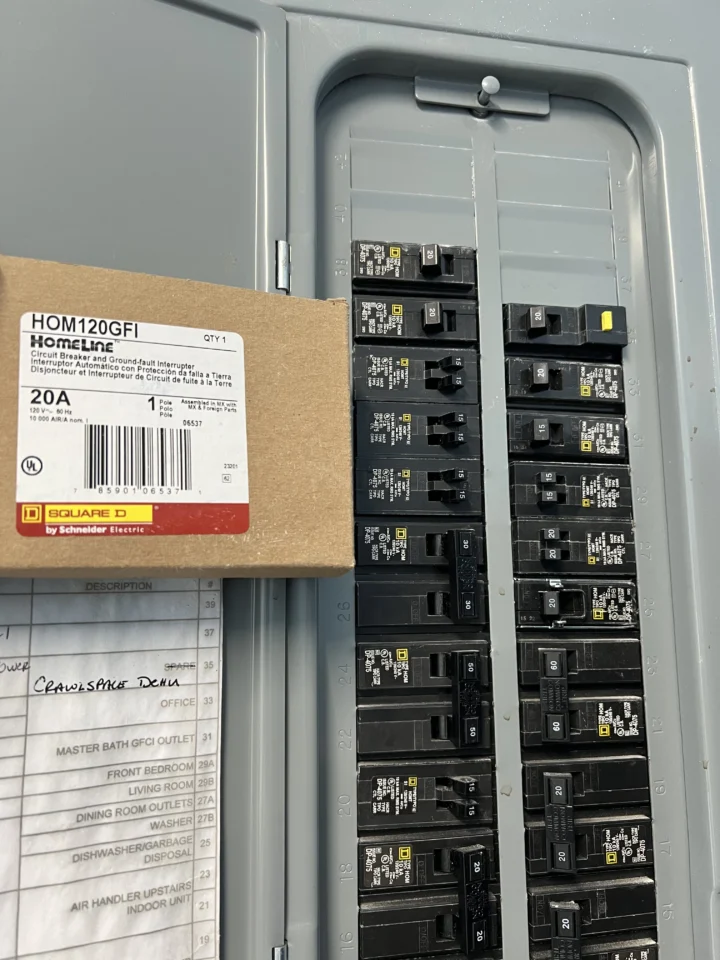
Should I replace or upgrade my breaker panel?
You may need panel replacement or an upgrade if the existing panel is outdated, undersized, damaged, or unable to support your home’s electrical demand.
Signs your panel may need replacement
Panel problems can affect the entire home.
These issues require professional evaluation.
When an upgrade makes sense
A panel upgrade may be needed when adding major electrical loads.
An upgraded panel can improve safety and provide capacity for future needs.
Repair versus replacement
Not every breaker issue requires a new panel.
If the panel is modern and in good condition, replacing one faulty breaker may be enough.
However, if the panel is aging, overloaded, or damaged, a broader upgrade may be the safer investment.
Code and insurance considerations
Electrical panels should meet current safety expectations.
Some older panels may raise concerns during inspections, insurance reviews, or real estate transactions.
A licensed electrician can explain whether your panel is acceptable, repairable, or ready for replacement.
Planning for long-term reliability
Electrical systems should support both present and future needs.
If your household has grown, your technology use has increased, or renovations are planned, panel capacity matters.
Professional guidance helps prevent repeated problems and repair costs.
Final Thoughts
A breaker that trips repeatedly should be taken seriously because it signals an electrical condition that needs correction. The cause may be an overload, short circuit, ground fault, faulty appliance, worn breaker, or outdated panel. Resetting the breaker again and again does not fix the problem and may increase risk. Professional diagnosis protects your wiring, appliances, and home safety. The right repair may be simple, but it must be based on proper testing, safe workmanship, and a clear understanding of your home’s electrical demand and long-term needs safely over time.
Get Reliable Breaker Help Before the Problem Grows
At The Go-To Crew Electric, we take recurring breaker problems seriously because they often point to hidden electrical stress. If your breaker keeps tripping, we can inspect the circuit, test the panel, identify the cause, and explain the safest repair options. Our goal is to help you restore dependable power without unnecessary work or guesswork. Contact us when you need professional electrical service and want your home evaluated with care, accuracy, and practical recommendations.