
A dedicated electrical circuit supplies power to a specific appliance or piece of equipment rather than sharing that circuit with several household devices. Dedicated circuits are commonly used for appliances with higher or more consistent electrical demands, helping ensure the wiring and circuit protection are appropriate for the equipment being powered.
So, what appliances need a dedicated circuit? The answer depends on the appliance, its electrical requirements, manufacturer specifications, the existing wiring, and applicable electrical codes. Ranges, dryers, water heaters, HVAC equipment, and certain kitchen appliances are common examples, but homeowners should not assume an appliance needs or does not need a dedicated circuit based on its type alone.
At The Go-To Crew Electric, we recommend having the electrical system evaluated when installing or replacing higher-demand equipment, particularly when the condition or capacity of an existing circuit is unclear.
What Is a Dedicated Electrical Circuit?
A dedicated circuit is an electrical circuit intended to serve a particular appliance or piece of equipment without supplying other unrelated electrical loads.
The circuit connects the equipment to the home’s electrical panel, where a circuit breaker provides protection for that circuit. The wiring, breaker, and other components must be appropriate for the equipment they serve.
This differs from many general-purpose household circuits. For example, several outlets or lights may share one circuit because their combined expected electrical demand can be accommodated appropriately.
Dedicated circuits become important when equipment has electrical requirements that make sharing a circuit inappropriate.
Why Do Some Appliances Need a Dedicated Circuit?
Some appliances use considerably more electricity than typical household devices. Others operate for extended periods or have electrical characteristics that need to be considered when the circuit is designed.
A dedicated circuit helps prevent other devices from adding additional electrical demand to the same circuit.
Whether one is required can depend on factors including:
- Appliance electrical demand
- Manufacturer specifications
- Existing wiring
- Circuit capacity
- Equipment type
- Applicable electrical requirements
Homeowners adding new equipment should therefore avoid making circuit decisions based solely on whether an available outlet is nearby.
Professional Electrical Wiring evaluation can determine what wiring and circuit configuration are appropriate for the appliance.
Which Appliances Commonly Need Dedicated Circuits?
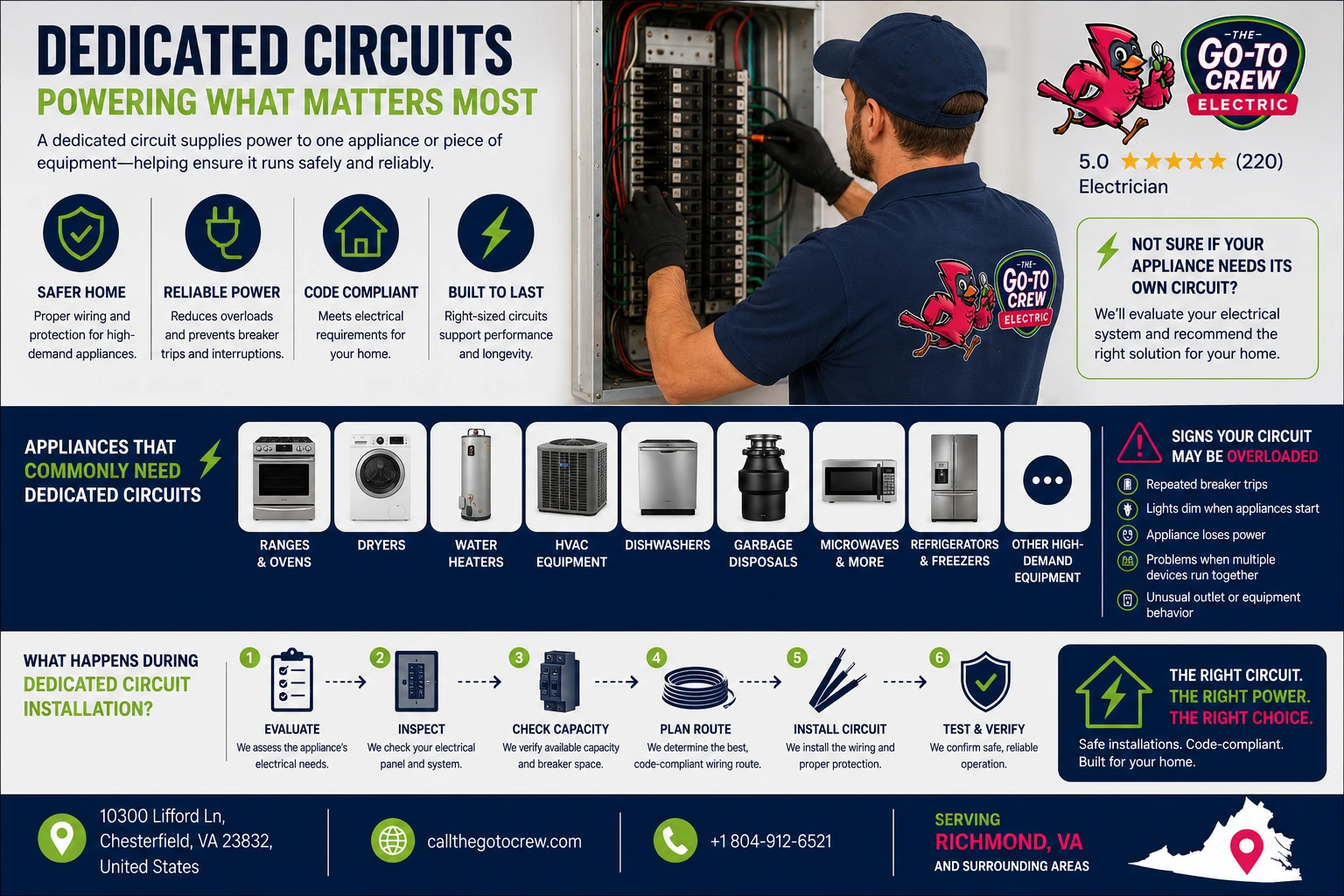
Many larger household appliances and permanently installed systems commonly have dedicated electrical circuits.
Examples can include:
- Electric ranges and ovens
- Clothes dryers
- Electric water heaters
- Heating and cooling equipment
- Dishwashers
- Garbage disposals
- Built-in or higher-demand microwaves
- Certain refrigerators and freezers
- Other high-demand household equipment
This should not be treated as a universal checklist. Appliance designs and electrical requirements vary.
The manufacturer’s requirements and the home’s electrical system should be evaluated before determining the appropriate circuit.
Do Kitchen Appliances Need Dedicated Circuits?
Some kitchen appliances may require or benefit from circuits specifically intended for their electrical demands, while others operate on circuits serving designated kitchen receptacles.
Microwaves
Microwave power requirements can vary considerably, particularly between countertop and permanently installed models. A replacement microwave should not automatically be connected based only on the fact that an existing outlet is available.
Dishwashers and Garbage Disposals
Dishwashers and disposals have their own electrical requirements that need to be considered during installation or replacement. Existing wiring should be evaluated to determine whether it remains appropriate for the new equipment.
Refrigerators and Freezers
Refrigerators and freezers can also have circuit considerations based on the installation and equipment requirements. A professional can determine the appropriate arrangement for a particular home.
Kitchen remodeling is an especially useful time to evaluate circuits because homeowners frequently add appliances or replace older equipment with models that have different electrical requirements.
Do Washers and Dryers Need Dedicated Circuits?
Washers and dryers should be considered separately because their electrical requirements are different.
A washing machine has its own power requirements based on the particular appliance and installation. The existing circuit should be evaluated when adding a washer or relocating laundry equipment.
Electric clothes dryers generally represent a substantially different electrical load and require a circuit designed for the dryer’s requirements. Gas dryers also use electricity for certain functions, but their electrical demands differ from those of electric dryers.
Because laundry equipment varies, homeowners should follow manufacturer requirements and have the electrical installation professionally evaluated rather than assuming a washer and dryer can share whatever circuit is nearby.
Do HVAC Systems and Other Large Equipment Need Dedicated Circuits?
Heating and cooling equipment can create significant electrical demands and commonly requires circuits specifically designed for the equipment.
Depending on the home, this may include air-conditioning equipment, heat pumps, electric heating components, or other permanently installed systems.
Other large equipment, such as electric water heaters, can also require dedicated electrical capacity.
These installations involve more than simply choosing a breaker. The equipment requirements, wiring, electrical panel, and available capacity all need to work together.
If the existing breaker repeatedly trips or there are concerns about circuit protection, The Go-To Crew Electric’s Circuit Breaker services can provide an appropriate next step for professional evaluation.
What Are the Signs an Appliance Is Overloading a Circuit?
A circuit breaker that trips when particular appliances operate may indicate that the electrical demand on the circuit needs to be investigated.
Other potential warning signs can include:
- Repeated breaker trips
- Lights dimming when equipment starts
- Electrical problems appearing when several devices operate together
- An appliance repeatedly losing power
- Unusual behavior from outlets or electrical equipment
These symptoms do not automatically prove that an overloaded circuit is the cause.
Electrical problems can have multiple explanations, including issues involving appliances, connections, breakers, wiring, or other components. Repeated electrical symptoms should be professionally diagnosed rather than addressed by repeatedly resetting a breaker or attempting to change the circuit yourself.
What Happens During Dedicated Circuit Installation?
Dedicated circuit installation begins with determining the electrical requirements of the appliance or equipment.
An electrician may review the equipment specifications, existing panel, available electrical capacity, current wiring, and proposed appliance location.
If a new circuit is appropriate, the electrician determines the necessary circuit configuration and evaluates how wiring can be routed between the electrical panel and equipment location while meeting applicable requirements.
The process may include:
- Evaluating the appliance’s electrical needs
- Inspecting the existing electrical panel
- Checking available capacity and breaker space
- Determining an appropriate wiring route
- Installing the required circuit and protection
- Verifying that the completed installation operates appropriately
Because electrical work can create shock, fire, and equipment risks when performed incorrectly, dedicated circuit installation should be handled by a qualified electrician.
Can an Existing Circuit Be Used for a New Appliance?
Possibly, but the presence of an existing outlet does not establish that the circuit is appropriate for a new appliance.
Two appliances that appear similar can have different electrical requirements. A replacement model may require a different circuit configuration than the equipment previously installed in the same location.
An electrician can evaluate the existing wiring, breaker, circuit usage, appliance specifications, and overall electrical conditions before determining whether the existing circuit can remain in use.
This is particularly important during kitchen renovations, laundry-room changes, HVAC replacements, and other projects involving higher-demand equipment.
When Should You Request an Electrical Evaluation?
Consider requesting an electrical evaluation before installing a new high-demand appliance or when you are uncertain whether existing wiring is suitable.
Professional evaluation is also appropriate when:
- Breakers repeatedly trip
- You are remodeling a kitchen or laundry area
- Major electrical equipment is being added
- Appliances are being relocated
- Existing wiring is older or its condition is unknown
- You are unsure what else shares an appliance circuit
- New equipment has different electrical requirements
- Your electrical panel has limited breaker space
An electrician can determine whether the existing circuit is suitable, whether a dedicated circuit should be installed, or whether another part of the electrical system requires attention.
What Richmond Homeowners Should Know About Dedicated Circuits
Homes throughout Richmond can have very different electrical systems depending on their age, previous renovations, appliance choices, and electrical upgrades completed over time.
That makes an individual assessment more useful than assuming an existing outlet or circuit is suitable for new equipment.
When replacing a major appliance or planning a renovation, consider the electrical requirements early in the project. Identifying circuit needs before equipment is installed can help prevent discovering an electrical limitation after the appliance is already in place.
The Go-To Crew Electric provides professional electrical services throughout the area. Homeowners who need their wiring, circuits, or panel evaluated can contact an Electrician in Richmond, VA for local assistance.
FAQs
What does it mean when an appliance needs a dedicated circuit?
It means the circuit is intended to supply that particular appliance or equipment rather than sharing its capacity with unrelated household loads. The appropriate circuit depends on the equipment’s electrical requirements.
What appliances commonly need dedicated circuits?
Electric ranges, ovens, dryers, water heaters, HVAC equipment, and certain kitchen appliances commonly have dedicated-circuit requirements. The exact requirements vary by equipment and installation.
Can two appliances share a dedicated circuit?
A circuit intended and required to serve one particular appliance generally should not be treated as a general shared circuit. An electrician can determine the appropriate configuration based on the equipment and applicable requirements.
Does a tripping breaker mean I need a dedicated circuit?
Not necessarily. Repeated breaker trips can have several causes. An electrician should diagnose the underlying problem before deciding whether adding or changing a circuit is appropriate.
Can I use an existing outlet for a new appliance?
An existing outlet does not necessarily mean the underlying circuit is suitable. The appliance requirements, wiring, breaker, and other loads on the circuit should be evaluated.
Does a refrigerator need its own circuit?
The appropriate circuit arrangement can depend on the refrigerator, installation, existing wiring, and applicable requirements. Have the electrical setup evaluated rather than assuming every refrigerator has identical circuit needs.
When should I call an electrician about an appliance circuit?
Call an electrician when adding higher-demand equipment, remodeling, experiencing repeated breaker trips, or when you are uncertain whether existing wiring and circuit capacity are appropriate.
Give New Appliances the Electrical Support They Need
Installing a new appliance should involve more than finding the nearest available outlet. The circuit behind that outlet needs to be appropriate for the equipment, existing electrical demand, and overall system.
At The Go-To Crew Electric, we can evaluate your appliance requirements, existing wiring, circuit breakers, and electrical panel to determine whether the current setup is suitable or a dedicated circuit is needed.
If you’re adding major equipment, remodeling your home, or dealing with repeated circuit problems, contact The Go-To Crew Electric for a professional electrical evaluation and a solution designed around your home’s actual electrical needs.