Yes, many homeowners can install an EV charger without upgrading their electrical panel. Whether your existing system can safely support one depends on more than the amperage rating printed on the panel. An electrician needs to consider your home’s available electrical capacity, existing loads, panel condition, breaker space, and the charging rate you want to use.
For some homes, the existing electrical system has enough capacity for EV charging as-is. Others may benefit from a lower charging rate or an appropriate load management solution. When the existing system cannot safely accommodate the additional demand, an electrical panel or service upgrade may be necessary.
At The Go-To Crew Electric, we recommend having the electrical system professionally assessed before deciding which EV charging setup is right for your home.
Can You Install an EV Charger Without Upgrading Your Electrical Panel?
An electrical panel upgrade is not automatically required just because you are adding an EV charger.
The key question is whether the home’s existing electrical system can safely handle the additional charging load along with the electrical demands already placed on it.
Two homes with similarly sized panels can have very different electrical needs. One might have substantial available capacity, while another already powers several high-demand appliances and has little room for an additional load.
A professional EV Charger Installation assessment can determine whether your current system is suitable before installation begins.
When Is an Electrical Panel Upgrade Necessary for an EV Charger?
A panel upgrade may become necessary when the existing electrical system cannot safely support the additional charging demand or when other limitations prevent a suitable circuit from being added.
An electrician may identify concerns such as:
- Insufficient available electrical capacity
- Limited or unavailable breaker space
- An older or deteriorated electrical panel
- Existing electrical demands that already use much of the home’s capacity
- Plans to add other high-demand electrical equipment
- Panel or service limitations that make the proposed installation unsuitable
The appropriate solution depends on the entire electrical system rather than the EV charger alone.
If an upgrade is necessary, homeowners can learn more about professional Electrical Panel services before moving forward.
How Do Electricians Calculate Available Electrical Capacity?
Electricians evaluate how much electrical demand a home is expected to place on its service and how the proposed EV charging load affects that demand.
This process is commonly referred to as a load calculation.
Rather than simply adding up the numbers printed on every breaker, the calculation considers household electrical loads according to applicable electrical requirements. The electrician can then determine whether sufficient capacity is available for the proposed charging equipment.
This is an important distinction because breaker ratings alone do not tell homeowners how much unused capacity their electrical service actually has.
Load calculations should be performed by a qualified professional rather than estimated through a DIY method.
How Does EV Charger Amperage Affect Panel Requirements?
Charging amperage directly affects how much electrical capacity an EV charging setup requires.
Generally, a higher-output charger can deliver more power to a compatible vehicle, potentially reducing charging time. That additional output also creates greater electrical demand.
A lower charging rate requires less capacity and may be suitable for homeowners who do not need the highest available charging speed.
Faster Is Not Automatically Better
Choosing charging equipment should involve more than selecting the highest amperage available.
The appropriate setup depends on factors including:
- The vehicle’s charging capability
- Daily driving needs
- Desired charging time
- Existing electrical capacity
- Circuit requirements
- Charging equipment specifications
The charger, vehicle, dedicated circuit, and home’s electrical system all need to work together safely.
Does a 200-Amp Panel Automatically Have Enough Capacity?
No. Having a 200-amp electrical service does not automatically mean there is enough unused capacity for any EV charger.
Panel size is only one part of the assessment.
A home with a 200-amp service may already have significant electrical demands from equipment such as electric heating, air conditioning, water heating, cooking appliances, dryers, pools, hot tubs, or other large loads.
Another home with the same service rating may use substantially less electricity and have more capacity available.
The panel also needs suitable breaker space and should be in appropriate condition for the proposed installation.
That is why homeowners should avoid assuming that a particular panel rating automatically means an EV charger can be added without further evaluation.
What Are the Alternatives to a Full Electrical Panel Upgrade?
When an electrician determines that the preferred EV charging setup would exceed available capacity, a full panel upgrade is not necessarily the only possible solution.
Depending on the home and applicable electrical requirements, alternatives may include:
Selecting a Lower Charging Rate
A lower-output charging configuration creates less electrical demand. For drivers whose vehicles remain parked overnight, a lower charging rate may still provide enough energy for typical daily driving.
Using Load Management
Certain systems can manage EV charging based on other electrical demands within the home.
Adjusting the Charging Plan
Sometimes the appropriate solution is selecting equipment or settings that better match the home’s available capacity and the driver’s actual charging requirements.
Not every alternative works for every property. A professional assessment is needed to determine which options are appropriate and code-compliant.
Can Load Management Help Avoid a Panel Upgrade?
In some situations, yes.
Load management is designed to control how EV charging interacts with other electrical usage in the home. Rather than allowing the charger to add its full demand regardless of what else is operating, an appropriate system can adjust charging based on available capacity.
For example, charging output may be reduced when household electrical demand is high and increased when more capacity becomes available.
This approach can sometimes allow EV charging to be added without increasing the home’s overall electrical service capacity.
However, load management is not a universal substitute for panel upgrades. The existing panel, service, charging equipment, electrical loads, and installation requirements all need to be evaluated before determining whether it is an appropriate option.
What Happens During an EV Charger Electrical Assessment?
Before installing charging equipment, an electrician can evaluate both the home’s electrical system and the homeowner’s charging needs.
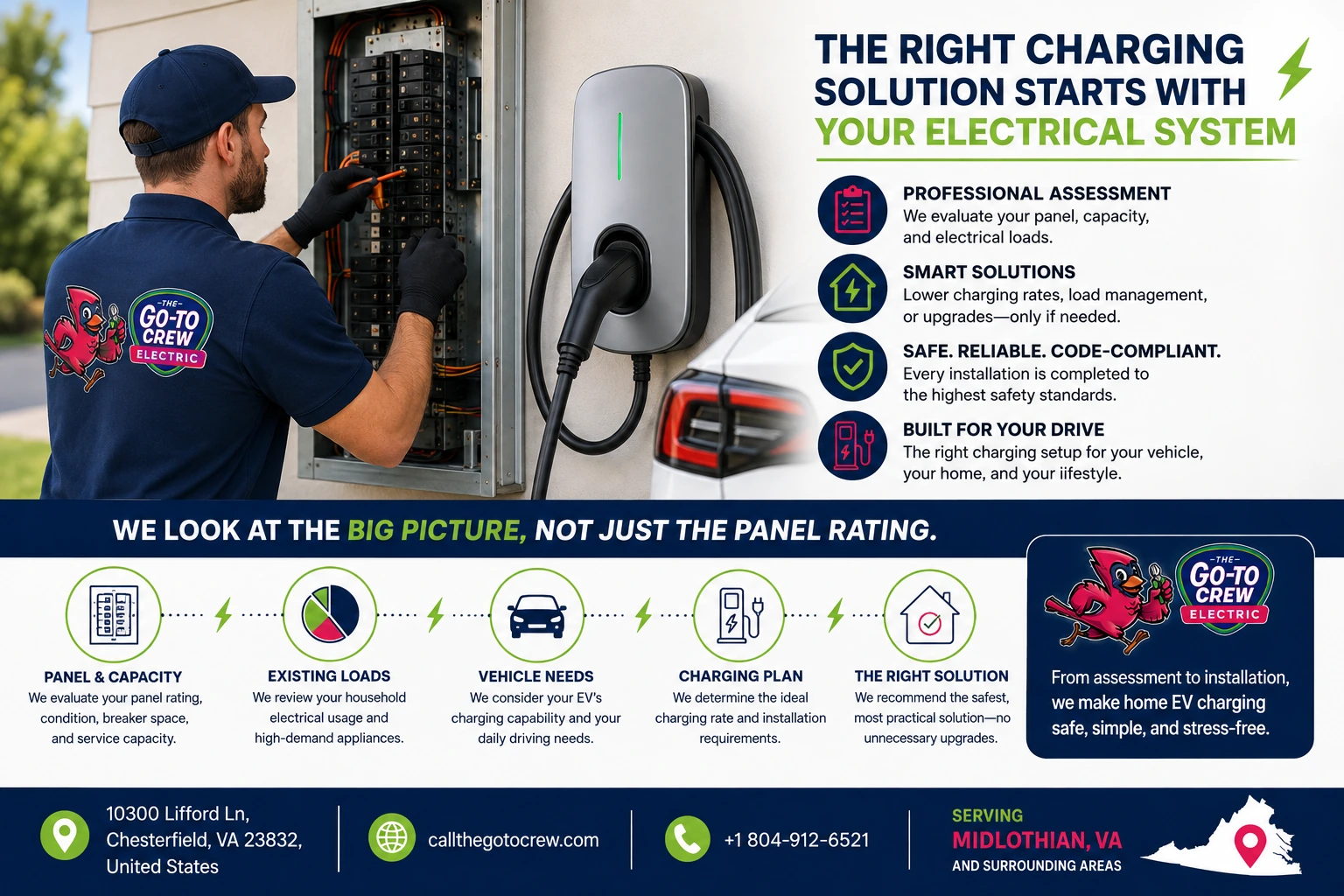
The assessment may include reviewing:
- Electrical service capacity
- Panel rating and condition
- Available breaker space
- Existing household electrical loads
- Proposed charger specifications
- Vehicle charging requirements
- Desired charging rate
- Potential installation location
- Whether load management may be appropriate
The electrician can also perform the necessary load calculations and determine whether the existing system can support the proposed charging setup.
If limitations are identified, the homeowner can then compare appropriate options instead of automatically assuming a complete electrical upgrade is necessary.
How to Know Which EV Charging Setup Is Right for Your Home
The right EV charging setup balances charging convenience with the capabilities of your home and vehicle.
Start by considering how much you actually drive.
Someone who drives a relatively short distance each day may not need the same charging output as someone who regularly arrives home with a nearly depleted battery and needs substantial charging overnight.
Your vehicle also has its own charging limitations. Installing equipment capable of delivering more power than the vehicle can accept may not provide the expected benefit.
A professional electrician can compare those practical needs with the home’s available electrical capacity and recommend an installation that makes sense for both.
The objective should be reliable charging—not simply installing the highest-output equipment possible.
What Midlothian Homeowners Should Know Before Installing an EV Charger
For Midlothian homeowners, adding home EV charging should begin with understanding the electrical system already in place.
Homes can differ significantly in age, electrical equipment, household loads, and available capacity. Even neighboring properties with similar service ratings may require different charging solutions.
Before purchasing equipment based solely on advertised charging speed, have an electrician evaluate whether it is compatible with your vehicle and home.
The Go-To Crew Electric provides electrical services for homeowners in the area. If you are planning an EV charging installation, you can connect with an Electrician in Midlothian, VA to have your existing electrical system and charging needs professionally evaluated.
FAQs
Do all EV chargers require an electrical panel upgrade?
No. Many homes can accommodate EV charging with their existing electrical system. Whether an upgrade is necessary depends on available capacity, existing loads, panel condition, breaker space, and the proposed charging setup.
Is a 200-amp panel enough for an EV charger?
It may be, but a 200-amp rating alone does not guarantee sufficient capacity. An electrician needs to evaluate the home’s existing electrical demand and proposed EV charging load.
What is an electrical load calculation for an EV charger?
A load calculation evaluates the electrical demands placed on a home’s service and considers the additional demand created by EV charging. It helps determine whether the existing system can safely accommodate the proposed installation.
Does a higher-amperage EV charger require more panel capacity?
Generally, higher charging output creates greater electrical demand. The charger, vehicle capability, circuit, and available household capacity should be considered together.
Can I use a lower charging rate instead of upgrading my panel?
In some situations, a lower charging rate may allow the installation to work within available electrical capacity. An electrician can determine whether this is appropriate for your home and charging needs.
Can load management prevent the need for a panel upgrade?
Load management may help in some installations by adjusting EV charging according to other household electrical demands. Whether it is suitable depends on the home’s electrical system and installation requirements.
How do I know how much electrical capacity my home has available?
Panel size alone does not provide the full answer. A qualified electrician can inspect the electrical system and perform the appropriate calculations to determine whether sufficient capacity exists.
Charge at Home Without Guessing About Your Electrical System
Installing an EV charger does not automatically mean your electrical panel needs to be replaced. The safest and most practical solution starts with understanding what your existing system can support and how much charging capacity you actually need.
At The Go-To Crew Electric, we can evaluate your panel, household electrical demand, vehicle charging requirements, and installation goals before recommending the appropriate path forward. Whether your home can support the charger as-is, would benefit from load management or a lower charging rate, or genuinely needs an electrical upgrade, the goal is to find a solution that fits your home safely.
If you are considering home EV charging, contact The Go-To Crew Electric to schedule an electrical assessment and determine the right setup for your vehicle and property.